Saturday, July 10, 2010

Wireless Mesh Network Solution


AP 7220


Nortel's Wireless Mesh Network solution extends the reach of Wireless LANs securely and cost effectively for enterprises and end users and offers service providers new opportunities to drive increased revenue generation. City governments and municipalities benefit from enhanced employee safety and efficiency as well as from an improved business climate.

Our Wireless Mesh Network solution addresses the market requirements for networks that are highly scalable and cost effective, offering end users secure, seamless roaming beyond traditional WLAN boundaries, and provides easy deployment in areas that do not (or cannot) support a wired backhaul. Nortel's Wireless Mesh Network solution is well-suited for providing broadband wireless access in areas that traditional WLAN systems are unable to cover.

SITE IMPLEMENTATION - RIYAZ PULAU DUYUNG, TERENGGANU.

Tuesday, October 14, 2008

IronPort® C150


The IronPort® C150™ is an accurate, affordable and easy to use all-in-one appliance — purpose-built for email security. Designed to meet the needs of small and medium businesses and satellite offices, the IronPort C150 is built on the same robust platform that protects the email infrastructures of major Global 2000 companies.

The IronPort C150 is designed and built not only for power and ease of use, but also for affordability. This innovative technology provides a comprehensive solution to ensure the availability and security of your email infrastructure—implemented in a manner that makes it cost-effective for companies of all sizes. The IronPort C150 uses the industry's most advanced technology to stop spam, viruses and anomalies in a fully automated manner. This allows highly skilled IT staff to focus on other problems, and leave the email issues to IronPort.


Sunday, August 24, 2008

Core router

A core router is a router designed to operate in the Internet backbone, or core. To fulfill this role, a router must be able to support multiple telecommunications interfaces of the highest speed in use in the core Internet and must be able to forward IP packets at full speed on all of them. It must also support the routing protocols being used in the core. A core route is distinct from an edge router: edge routers sit at the edge of a backbone network and connect to core routers.

Like the term "supercomputer", the term "core router" refers to the largest and most capable routers of the then-current generation. A router that was a core router when introduced will not be a core router ten years later. At the inception of the ARPANET (the Internet's predecessor) in 1969, the fastest links were 56 kbit/s and a given routing node had at most six links. The "core router" was a dedicated minicomputer called an IMP Interface Message Processor.[1][2][3] Link speeds increased steadily, requiring progressively more powerful routers until the mid-1990s, when the typical core link speed reached 155 Mbit/s. At that time, several breakthroughs in fiber optic telecommunications (notably DWDM and EDFA technologies) combined to permit a sudden dramatic increase in core link speeds: by 2000, a core link operated at 2.5 Gbit/s and core internet companies were planning for 10 Gbit/s speeds.

The largest provider of core routers in the 1980s and 1990s was Cisco Systems, who provided core routers as part of a broad product line. This was despite the presence of faster and more capable routers from Wellfleet Communications, which existed as an independent company until it merged with SynOptics Communications in 1994, to become Bay Networks. Juniper Networks entered the business in 1996, focusing primarily on core routers. Both companies addressed the need for a radical increase in routing capability that was driven by the increased link speed. In addition, several new companies attempted to develop new core routers in the late 1990s. It was during this period that the term "core router" came into wide use. The required forwarding rate of these routers became so high that it could not be met with a single processor or a single memory, so these systems all employed some form of a distributed architecture based on an internal switching fabric.

The Internet was historically supply-limited, and core Internet providers historically struggled to expand the Internet to meet the demand. During the late 1990s, they expected a radical increase in demand, driven by the Dot-com bubble. By 2001, it became apparent that the sudden expansion in core link capacity had outstripped the actual demand for internet services in the core. The core internet providers were able to defer purchases of new core routers for a time, and most of the new companies went out of business. Cisco and Juniper were able to deliver their newest core router products several years later.

As of 2007, the internet core link speed is 10 Gbit/s, with a few links at 40 Gbit/s. Cisco's core router is the CRS-1 and Juniper's core routers comprise the T-series.

Friday, August 22, 2008

Server Rack


A rack server, also called a rack-mounted server, is a computer dedicated to use as a server and designed to be installed in a framework called a rack. The rack contains multiple mounting slots called bays, each designed to hold a hardware unit secured in place with screws. A rack server has a low-profile enclosure, in contrast to a tower server, which is built into an upright, standalone cabinet.

A single rack can contain multiple servers stacked one above the other, consolidating network resources and minimizing the required floor space. The rack server configuration also simplifies cabling among network components. In an equipment rack filled with servers, a special cooling system is necessary to prevent excessive heat buildup that would otherwise occur when many power-dissipating components are confined in a small space.

Tuesday, April 15, 2008

BFG NVIDIA GeForce 8500 GT 256MB PCIe


The BFG NVIDIA® GeForce® 8500 GT graphics card offers the features of the GeForce 8 Series architecture for an incredible value. Essential for accelerating the Microsoft® Windows Vista™ experience, the BFG NVIDIA GeForce 8500 GT is designed to enhance the Windows Vista Aero™ graphical 3D interface, allow you to play the latest Microsoft DirectX® 9 and DirectX 10 games, and enjoy the ultimate HD movie experience with PureVideo™ HD technology.

Built for Microsoft Windows Vista
NVIDIA's fourth-generation GPU architecture built for Windows Vista gives users the best possible experience with the Windows Aero 3D graphical user interface, included in the new operating system (OS) from Microsoft.

Full Microsoft DirectX 10 Support
World's first DirectX 10 GPU with full Shader Model 4.0 support delivers unparalleled levels of graphics realism and film-quality effects.

NVIDIA SLI™ Technology1
Delivers up to 2x the performance of a single graphics card configuration for unequaled gaming experiences by allowing two graphics cards to run in parallel. The must-have feature for performance PCI Express® graphics, SLI dramatically scales performance on today's hottest games.

NVIDIA unified architecture
Fully unified shader core dynamically allocates processing power to geometry, vertex, physics, or pixel shading operations, delivering up to 2x the gaming performance of prior generation GPUs.

GigaThread™ Technology
Massively multi-threaded architecture supports thousands of independent, simultaneous threads, providing extreme processing efficiency in advanced, next generation shader programs.

NVIDIA Lumenex™ Engine
Delivers stunning image quality and floating point accuracy with ultra-fast frame rates.

NVIDIA Quantum Effects™ Technology
Advanced shader processors architected for physics computation enable a new level of physics effects to be simulated and rendered on the GPU-all the while freeing the CPU to run the game engine and AI.

NVIDIA ForceWare® Unified Driver Architecture (UDA)
Delivers a proven record of compatibility, reliability, and stability with the widest range of games and applications. ForceWare provides the best out-of-box experience for every user and delivers continuous performance and feature updates over the life of NVIDIA GeForce GPUs.

OpenGL® 2.0 Optimizations and Support
Ensures top-notch compatibility and performance for OpenGL applications.

NVIDIA nView® Multi-Display Technology
Advanced technology provides the ultimate in viewing flexibility and control for multiple monitors.

NVIDIA PureVideo HD Technology²
The combination of high-definition video decode acceleration and post-processing that delivers unprecedented picture clarity, smooth video, accurate color, and precise image scaling for movies and video.

PCI Express Support
Designed to run perfectly with the PCI Express bus architecture, which doubles the bandwidth of AGP 8X to deliver over 4 GB/sec. in both upstream and downstream data transfers.

1 - NVIDIA SLI certified versions of GeForce PCI Express GPUs only.
2 - Feature requires supported video software. Features may vary by product.

Friday, February 15, 2008

ZYPAD


he Zypad WL 1000 is based on a Raza Microelectronics 32-bit MIPS-based AU 1100 processor (formerly offered by AMD) clocked at 400MHz. It has 64MB each of flash RAM and flash ROM, with expansion available through an SD card slot.

The Zypad WL 1000 has a 3.5-inch QVGA (240 x 320) touchscreen with automatic contrast adjust. It also features an 11-key backlit keypad.

Network interfaces include 802.11b/g, GPS, and PAN Bluetooth class 2 (32 feet), each with integral antennas. The device also includes USB 1.1 host and device ports, along with stereo audio I/O.

The Zypad WL 1000 comes with a 2200 mAh 3.6 V Li-ion removable battery pack claimed to offer up to eight hours of life, depending on usage. An external power supply and car adapter will be available separately.

Additional touted features include:

* Comfortable weight distribution, even over clothing
* Tilt and dead reckoning system -- can determine if a user is motionless or has fallen down, and initiate radiosonde beacon
* Patent-applied-for switch initiates standby mode when users arm hangs down beside the body
* Claimed battery life up to 8 hours

Mike Southworth, marketing director, said Pavus is optimistic about the marketplace prospects for the unique wrist-worn PC. "The WL 1000 is a great platform for systems integrators and OEMs to build products on. The types of projects expressing interest in the defense space include healthcare systems that provide treatment information and patient history to field paramedics. There's a Navy program that calls for such devices in the thousands of units."

Availability

The Zypad WL 1000 is being manufactured by Eurotech in Italy, according to Southworth. Parvus currently has demo units, and expects to have the product "on the shelf" in late July, priced at $2,500.

Eurotech's Wrist-worn PC roadmap also calls for an ARM-based model by year's end, Southworth said.

The Zypad WL 1000 is being demonstrated at the Armed Forces Communication Electronics Association's 2006 TechNet International Conference held today in Washington D.C.

Thursday, November 22, 2007

HTC P4550 Kaiser


Dimensions: 59 x 112 x 19 millimetres
Mass: 190 grams (battery included)
Software Environment
Operating System: Windows Mobile 6 Professional AKU 0.2.2
Microprocessor
CPU: 32bit Qualcomm MSM7200 Chipset
CPU Clock: 384 MHz
Memory, Storage capacity
ROM capacity: 256 MB (accessible: 145.24MB)
RAM capacity: 128 MB
Hard Disk capacity: Not supported
Display
Display Type: color transflective TFT , 65536 scales
Display Resolution: 240 x 320
Display Diagonal: 2.8 "
Sound
Microphone: mono
Speaker: mono
Audio Output: Proprietary jack
Cellular Phone
Cellular Networks: GSM850, GSM900, GSM1800, GSM1900, UMTS850, UMTS1900, UMTS2100
Cellular Data Link: CSD, GPRS, EDGE, UMTS, HSDPA, HSUPA
Call Alert: 72 -chord melody
Vibrating Alert: Supported
Control Peripherals
Positioning Device: Touchscreen
Keyboard: Slide-out QWERTY-type keyboard, 41 keys
Directional Pad: 5 -way block
Jog / Scroll Wheel: Pressable rotary scroll wheel
Interfaces
Expansion Slots: SDIO, microSD, TransFlash
Serial: RS-232 , 115200bit/s
USB: USB 2.0 client, 60Mbit/s , USB Series Mini-B (mini-USB) connector
Bluetooth: Bluetooth 2.0
Wireless LAN: 802.11b, 802.11g
Multimedia Telecommunication
Analog TV: Not supported
Analog Radio: Not supported
Satellite Navigation
Built-in GPS: NMEA 0183 , 20 channels
Built-in Digital Camera
Main Camera: CMOS sensor, 2.8MP
Autofocus (AF): Supported
Built-in Flash: Not supported
Secondary Camera: CMOS sensor, 640x480 pixel
Power Supply
Battery: Lithium-ion , removable
Battery Capacity: 1350 mAh

Sunday, October 7, 2007

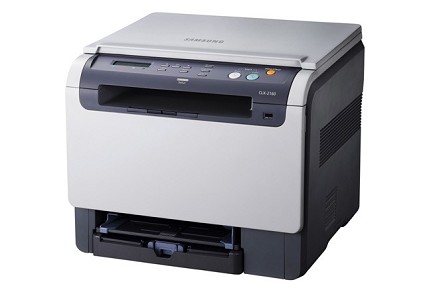
Samsung CLX 2160


Samsung touts the CLX-2160 (and its network capable sibling, the CLX-2160n, RRP AU$849) as the world's smallest colour laser multifunction printer. They're undoubtedly correct (for now), although being a laser printer still means you're talking about a unit of some size; those who need a truly compact multifunction device will still need to look at the inkjet world for now. The CLX-2160 measures in at 41.3cm by 35.3cm by 33.3cm and weighs a chunky 16.5 kilograms; it's one of those IT devices that looks lighter than it in fact is.

Installation of the CLX-2160 is relatively painless, especially for a colour laser. It wouldn't be a home printer without the need to remove lots of bits of seemingly superfluous sticky tape, but once you're past that easily penetrable barrier, it's just a matter of installing the toner cartridges, which come in quite cute colour-coded cylinders. They all load simply from the front of the unit in a very similar style to many inkjet multifunction devices. All the cartridges are physically keyed, so it's not possible to insert them the incorrect way.

Samsung do perpetrate one our key irritants when it comes to consumer printers –- the CLX-2160 ships without a USB cable. C'mon guys –- you've already got AU$799 of our hard-earned cash –- would a AU$5 cable break the bank? Drivers and simple print utilities are supplied for Windows and Mac OS X.

Thursday, September 20, 2007

Sun SPARC Enterprise M8000 Server


At A Glance
* Optimized for 24x7 mission critical computing
* Features up to 16 high performance dual core SPARC64 VI processors and up to 512 GB memory
* Mainframe RAS capabilities
* Ideal consolidation platform with up to 16 dynamic domains and thousands of Solaris Containers per system
* Up to 112 PCIe or PCI-X slots with the external I/O expansion unit
* Includes Solaris 10 preinstalled
* Available as a Sun System Pack, which combines the Sun SPARC Enterprise M8000 with the right services as one offering
* 100% binary compatibility with UltraSPARC processors

Key Applications

* OLTP and BIDW databases
* ERP, SCM, CRM deployments
* High floating point applications
* Compute-intensive scientific/engineering application serving
* Applications requiring large shared memory spaces


Key Benefits

* High single-system performance for large workloads
* Open systems virtualization and application consolidation
* Increased reliability, availability, serviceability
* Faster I/O and increased I/O connectivity
* Safe application portability—fits into your existing environment
* SPARC/Solaris 10 binary compatibility—Solaris Application Guarantee

Creative Aurvana DJ - Headphones


Look good while mixing in style! If you're looking for the ultimate DJ experience, you need Aurvana DJ Headphones. With high-end drivers and premium components they'll give you the professional results you need, whether you're mixing in a studio or club. These true DJ headphones deliver on the style front too, with brushed metal highlights and diamond-cut finishing to make you look as good as your music sounds! Aurvana DJ Headphones bring you the very best of Creative's audio leadership and innovation gained with Sound Blaster technologies, E-MU music creation systems and ZEN MP3 players.

Monday, September 17, 2007

ProCurve Switch 1700 Series


The ProCurve Switch 1700 series complements the ProCurve Switch 1800 series as the newest addition to the ProCurve Web-Managed portfolio. Ideal for businesses making the transition from unmanaged to managed networks, the ProCurve Switch 1700 series consists of two Web-Managed switches. The ProCurve Switch 1700-8 is a small-form-factor switch with 7 10/100 ports and 1 10/100/1000 port. Ideal for deployment in open spaces, both switches feature silent operation via a fanless design. The ProCurve Switch 1700 series enables increased network capabilities without added complexity.

Sunday, September 16, 2007

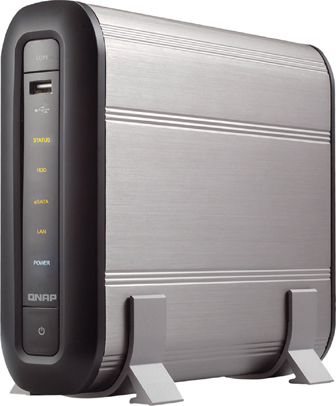
Qnap TS-109


Model
Brand QNAP
Model TS-101
Spec
Port / Connector 3 x USB 2.0
1 x e-SATA
1 x Gigabit RJ-45 Ethernet port
Supported Protocols
TCP/IP
Apple Talk
Microsoft networks (CIFS/SMB)
Apple (AFP)
Internet (HTTP)
File Transfer Protocol (FTP, max suggested 64 concurrent connections)
Operating System
Operation System: Linux embedded system
OS Supported (for Client PC):
Microsoft Windows 98/ME/NT/2000/XP/2003
Macintosh system 7.5 or above
Processor
SoC
Management
Network Management:
Fixed IP address
Dynamic IP address
Jumbo Frame

Disk Management:
Single disk
Q_RAID 1 with external USB/eSATA Hard disk
Disk usage status management
Check disk / Bad blocks scan

User Management:
User account management (max 512 users)
User group management (max 1024 groups)
User can change password

File System Management:
Network share management (max 1023 shares)
Share level ACL support
Unicode Support
Journaling file system
Over 2 GB files support

System Management:
Web-based administration (auto detect language)
Quick Install Wizard
LED display
Reset button
Support network time protocol

Backup Management:
Support client backup software NetBak Replicator
Schedule to remote replication backup
Block level remote replication

Web File Management:
Manage files via webpage
Form Factor Portable desktop
Default/ Max. Memory DRAM: 64MB
Flash Memory: 16MB
RAID Q-RAID 1 with external USB/eSATA Hard disk
Data Transmission Speed 10/100/1000 Mbps
LEDs USB, status, HDD, eSATA, LAN, Power
Power External power adapter, 36W, 100~240V
Dimensions 8.3" x 7.2" x 2.4"
Weight 2.65 lbs. (Net weight)
Temperature 0~35 °C
Humidity 0~85% R.H

Saturday, September 15, 2007

Cyborg Rumble


- 2 quick-fire sholder triggers, 8-way D-pad, 6 responsive buttons
- 2 analog joysticks with built-in buttons
- Shift key provides an additional 20 programmable functions
- Includes Saitek Smart Technology software

Wednesday, September 12, 2007

D-Link DSL-2640T 54Mbps (802.11g) Wireless ADSL 2/2+ Router


Product Features:

• Combined Wireless Router and ADSL Modem Solution
• Wirelessly Connect to the Internet With 802.11g Technology
• Network Security with Integrated Firewall Features

Product Description:

The DSL-2640T wireless ADSL router is a versatile, high-speed remote router for home and the small office. With integrated ADSL2/2+ supporting up to 24Mbps download speed, firewall protection, Quality of Service (QoS), 802.11g wireless LAN and 4 Ethernet switch ports, this router provides all the functions that a home or small office needs to establish a secure and high-speed remote link to the outside world.

High-Speed ADSL Connection.
The DSL-2640T features the latest ADSL2/ADSL2+ standards, providing speeds of up to 24Mbps downstream and 1Mbps upstream (ADSL2+), or 12Mbps downstream and 1Mbps upstream (ADSL2). This router auto-senses the connection type and auto-negotiates the best modulation scheme, using the G.hs (handshake) protocol.

Ready Wireless LAN & Ethernet Connection for Workgroup.
The DSL-2640T provides an integrated 802.11g WLAN interface supporting wireless speeds of up to 54Mbps and interoperability with 802.11b wireless devices on the 2.4GHz frequency band. It also provides four 10/100Mbps Ethernet switch ports for ready workstations connection. These built-in functions save you the cost and trouble of installing a separate wireless access point and an Ethernet switch.

Firewall Protection.
The router provides firewall security using Stateful Packet Inspection (SPI) and hacker attack logging for Denial of Service (DoS) attack protection. SPI inspects the contents of all incoming packet headers before deciding what packets are allowed to pass through. Access control is provided with packet filtering based on port and source/destination MAC/IP addresses. With Virtual Server Mapping, the router can be set to allow separate FTP, Web, and multiple games to share the same Internet-visible IP address while still protecting your servers and workstations from hackers. You can configure any of the built-in LAN ports of the router to function as a DMZ port. VPN pass-through is provided to let mobile users access files and mail from offices to work at home without having to use complex VPN client software.

Quality of Service Features.
The DSL-2640T supports 4 priority queues to enable a group of home or office users to experience the benefit of smooth network connection of inbound and outbound data without concern of traffic congestion. This QoS support allows you to enjoy high ADSL transmission for applications such as VoIP, multimedia and on-line games over the Internet.

Intel® Dual-Core Processors


In April of 2005, Intel announced the Intel® Pentium® processor Extreme Edition, featuring an Intel® dual-core processor, which can provide immediate advantages for people looking to buy systems that boost multitasking computing power and improve the throughput of multithreaded applications. An Intel dual-core processor consists of two complete execution cores in one physical processor (right), both running at the same frequency. Both cores share the same packaging and the same interface with the chipset/memory. Overall, an Intel dual-core processor offers a way of delivering more capabilities while balancing energy-efficient performance, and is the first step in the multi-core processor future.

An Intel dual-core processor-based PC will enable new computing experiences as it delivers value by providing additional computing resources that expand the PC's capabilities in the form of higher throughput and simultaneous computing. Imagine that a dual-core processor is like a four-lane highway—it can handle up to twice as many cars as its two-lane predecessor without making each car drive twice as fast. Similarly, with an Intel dual-core processor-based PC, people can perform multiple tasks such as downloading music and gaming simultaneously.